Last updated: 2026-05-13
The AI agent you build in Freddy AI Agent Studio does more than answer questions. It detects the language your employees write in, decides what to do when it cannot find an answer, and knows when to hand a conversation to a human. The Configurations section is where you control everything.
This article walks you through each configuration area: multilingual support, conversation behavior, human handover, and agent identity. Work through them in order when setting up a new agent, or jump to the section that matches what you need to change.
Key concepts to know before you start
The following terms come up throughout this article.
| Term | What it means |
|---|---|
| Multilingual support | The ability to configure which languages the agent responds in, in addition to English (the primary language). |
| Conversation behavior | Settings that define how the agent responds when it cannot answer a question, and whether it collects feedback at the end of a conversation. |
| Fallback message | The response the agent sends when it cannot find an answer to a question. |
| Collect feedback | A setting that prompts users to rate the agent’s response after each conversation, and defines what the agent does with that rating. |
| Human handover | The process of converting an AI conversation into a support ticket so a human agent can take over. |
| Agent identity | The name and avatar that users see when they interact with the agent. |
Where to find these settings
All the settings in this article are located under Configurations in AI Agent Studio.
1. Open AI Agent Studio and select the agent you want to configure.
2. In the left navigation, expand Build.
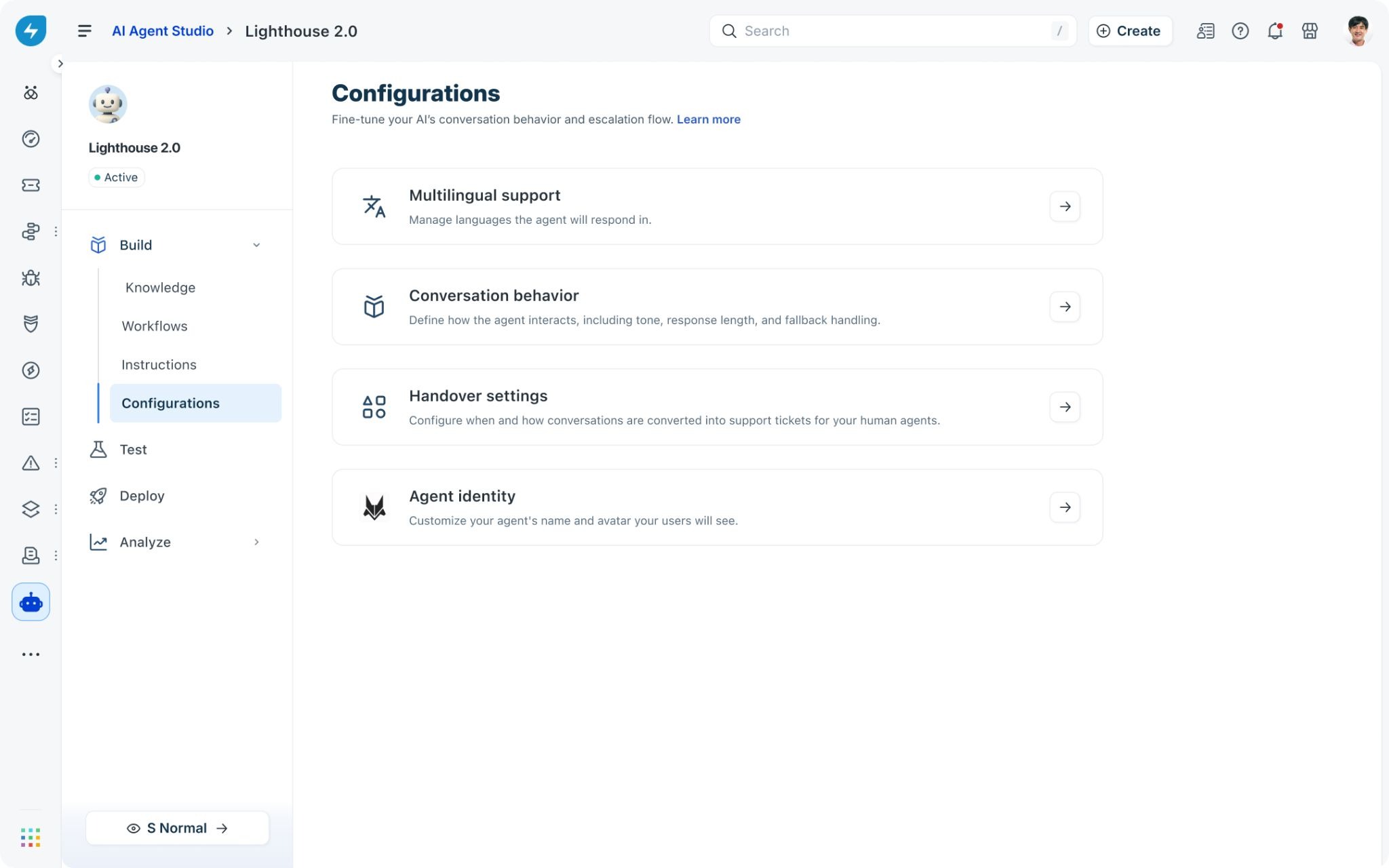
3. Click Configurations. The Configurations page lists four options: Multilingual support, Conversation behavior, Handover settings, and Agent identity. Click any option to open it.
Manage multilingual support
Multilingual support lets you define which languages the agent responds in. English is always the primary language. When you add additional languages, the agent detects what language an employee is writing in and matches its response to that language automatically.
Add or remove languages
1. On the Configurations page, click Multilingual support.
2. The Language configuration section shows the languages currently selected. English (Primary) is always present and cannot be removed.
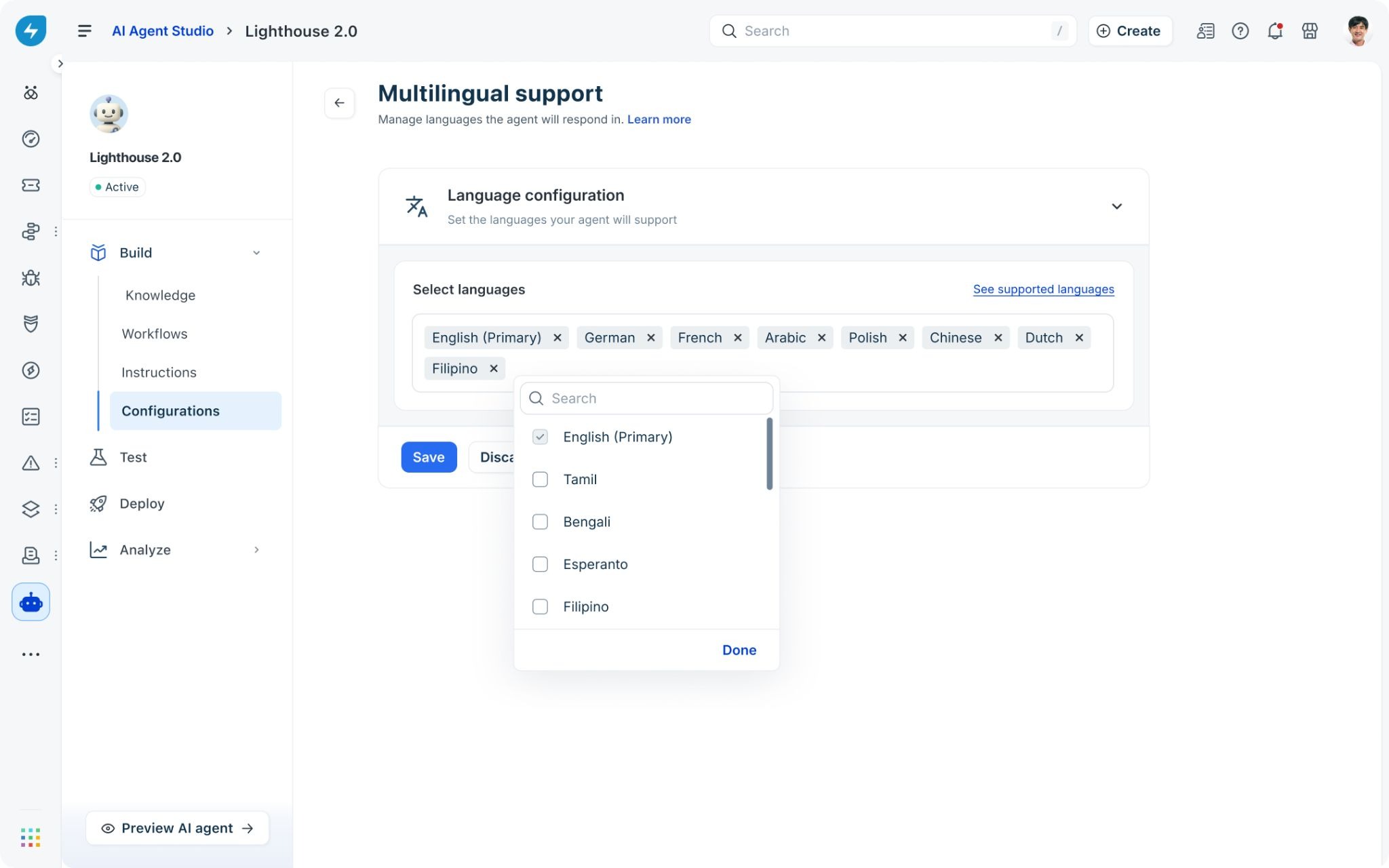
3. Click inside the language field to open the language picker. Use the Search box to find a language by name, or scroll through the list.
4. Check the box next to each language you want to add. You can add languages including German, French, Arabic, Polish, Chinese, Dutch, Filipino, Tamil, Bengali, Esperanto, and others. Checked languages are already selected.
5. Click Done to close the picker. The selected languages appear as tags in the language field.
6. To remove a language, click the X on its tag.
7. Click Save.
``` To see the complete list of languages the agent supports before making your selection, click See supported languages in the top-right corner of the Language configuration section. ```
Configure conversation behavior
Conversation behavior settings define two things: what the agent says when it cannot answer a question, and whether it asks users for feedback at the end of a conversation. Click Conversation behavior on the Configurations page to open these settings.
Set the fallback message
The fallback message is what the agent sends when it cannot find an answer. It gives users a clear next step rather than leaving them without a response.
1. Expand Send fallback message by clicking its row.
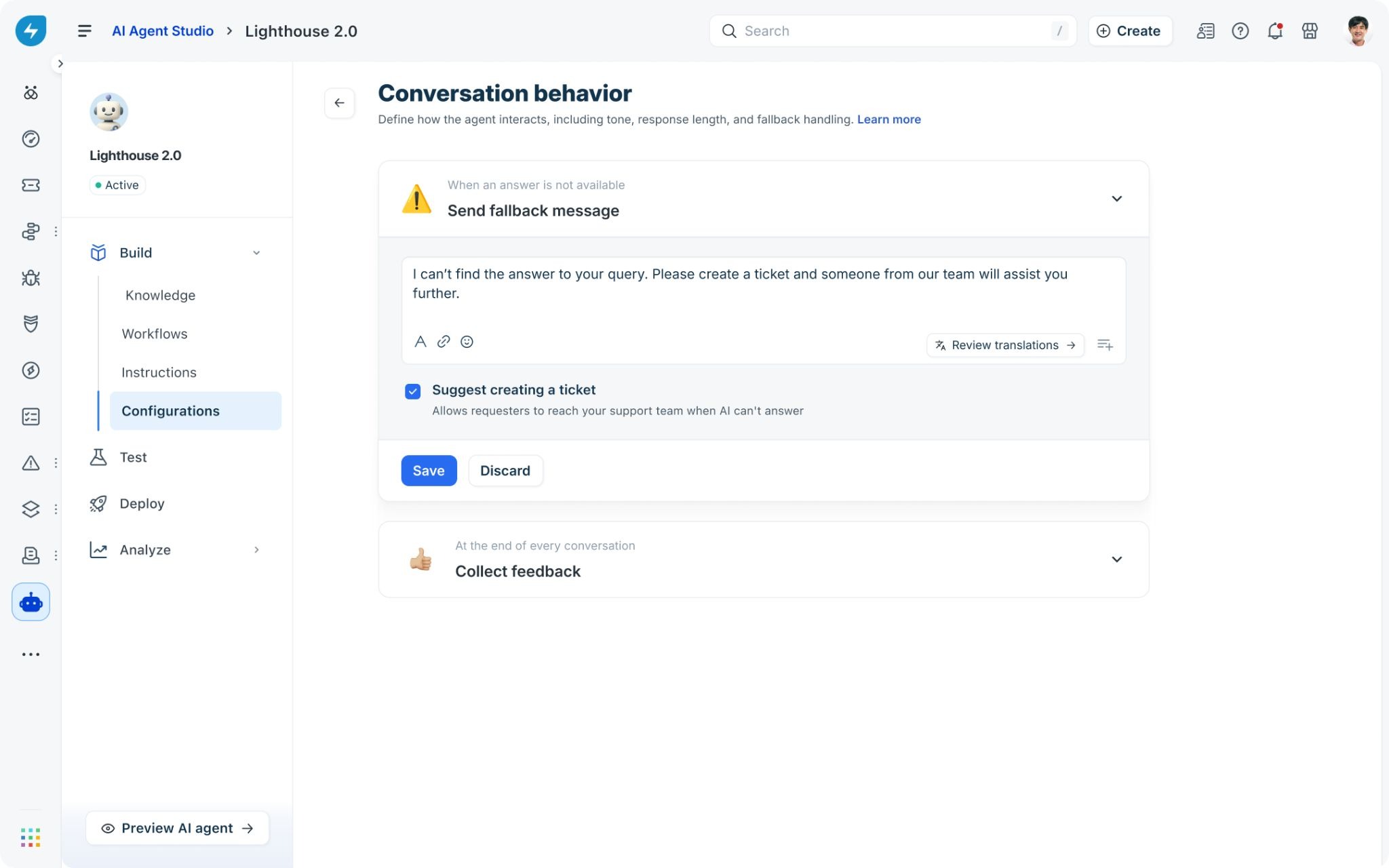
2. Edit the message text in the field. The default message reads: I can’t find the answer to your query. Please create a ticket and someone from our team will assist you further. Update this to match your organization’s tone and support process.
3. If you want the agent to offer users the option to raise a support ticket when the fallback message appears, check Suggest creating a ticket. This gives users a direct path to human support when the agent cannot help.
4. Click Save.
``` If you support multiple languages, click Review translations next to the fallback message to review and edit the message in each of your configured languages. This ensures users always see a fallback message in their own language. ```
Configure feedback collection
The Collect feedback setting controls whether the agent asks users to rate its response at the end of each conversation, and what the agent does based on their answer.
1. Expand Collect feedback by clicking its row.
2. Toggle Always ask for feedback on. The toggle turns blue and the feedback configuration fields appear below it.
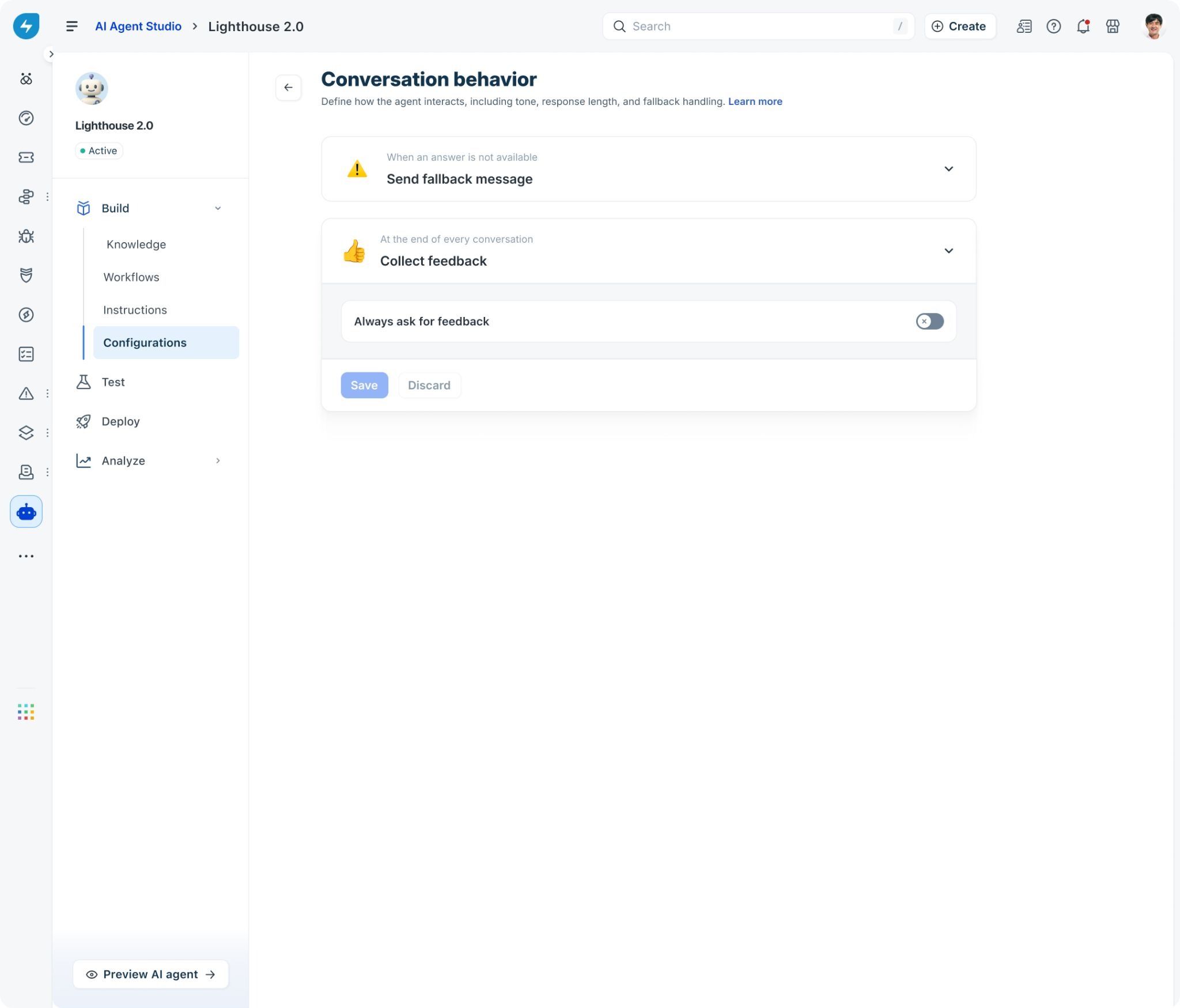
3. In the Feedback message field, enter the question you want the agent to ask. The default is: Was this helpful?
4. Under When response is Yes, choose what the agent does when a user says the conversation was helpful:
5. In the Display a message field under the Yes response, enter the confirmation message to show. For example: I’m glad to hear that I could assist you!
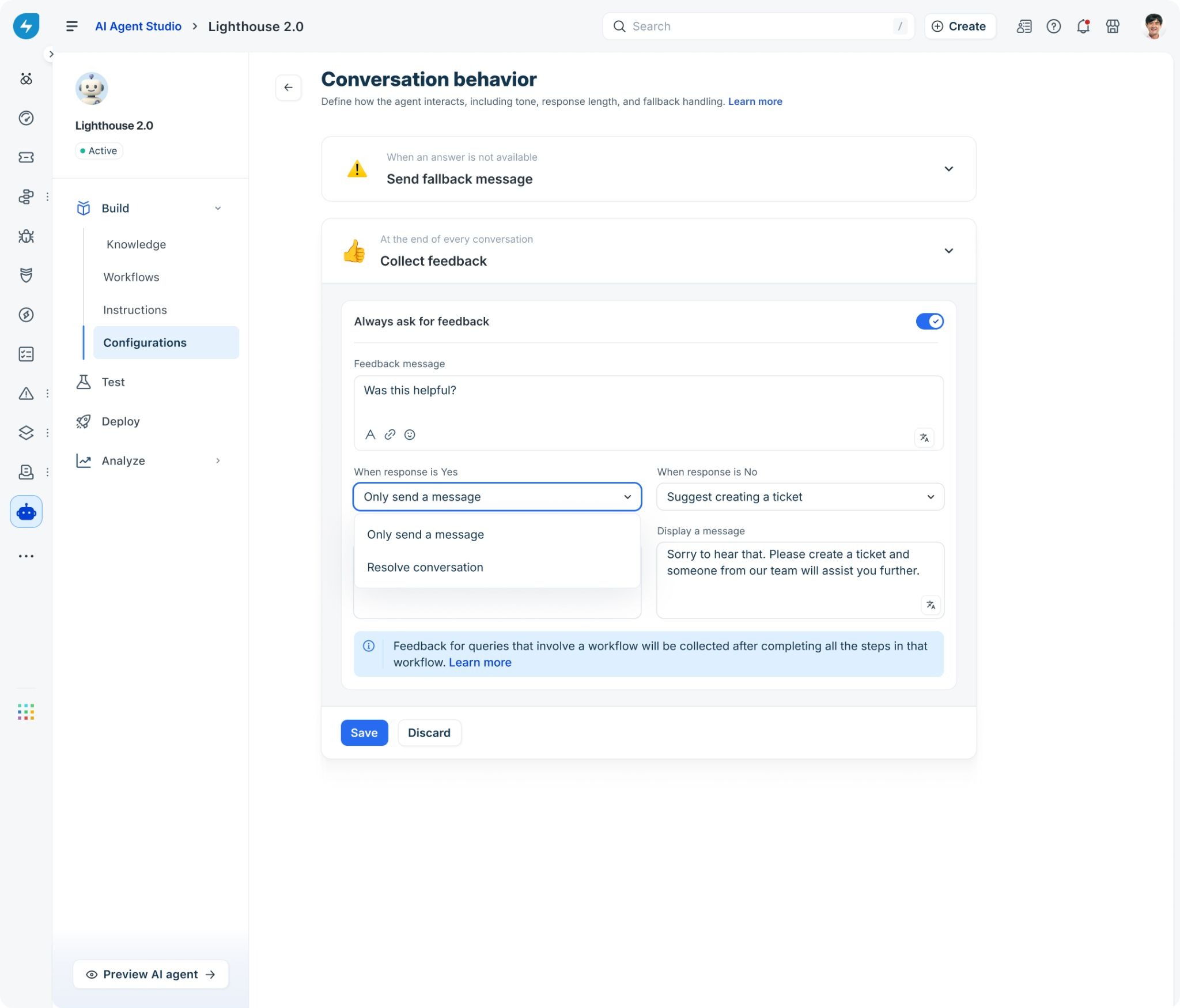
6. Under When response is No, choose what the agent does when a user says the conversation was not helpful. The default action is Suggest creating a ticket, which gives the user a path to human support.
7. In the Display a message field under the No response, enter the message to show. For example: Sorry to hear that. Please create a ticket and someone from our team will assist you further.
8. Click Save.
``` Feedback for queries that involve a workflow is collected after all steps in that workflow are completed, not when the question is first asked. This ensures the rating reflects the full interaction. ```
Set up human handover
Handover settings control when and how the agent converts a conversation into a support ticket for a human agent to handle. This is the primary escalation path when the AI cannot resolve an issue on its own.
1. On the Configurations page, click Handover settings.
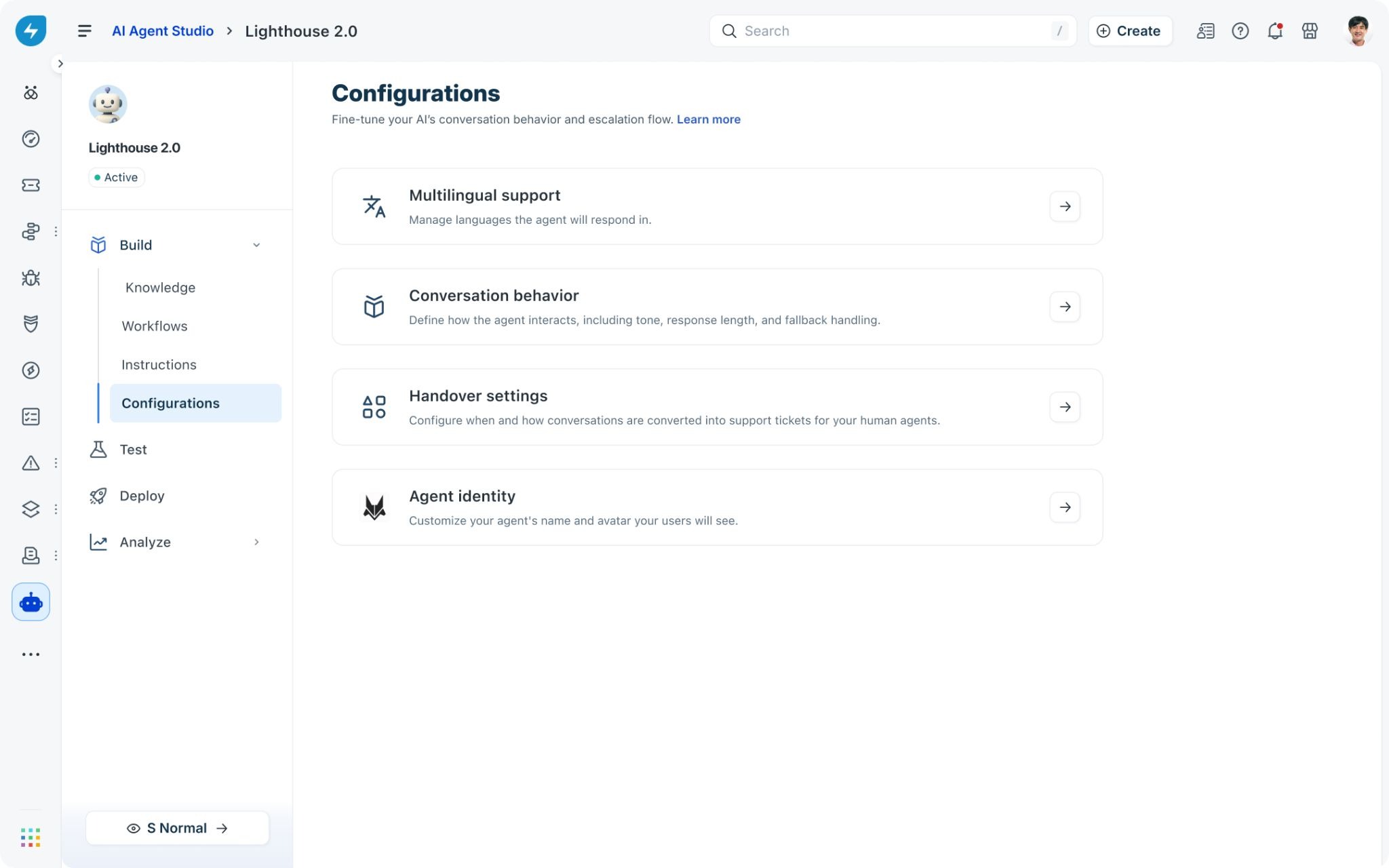
2. Configure the conditions that trigger a handover, the ticket details that are created on escalation, and any routing or priority rules your team uses.
3. Click Save.
``` Make sure your Freshservice ticket routing and assignment rules are configured before enabling handover. The AI agent creates the ticket, but your existing Freshservice workflows determine which team or agent receives it. ```
Customize your agent identity
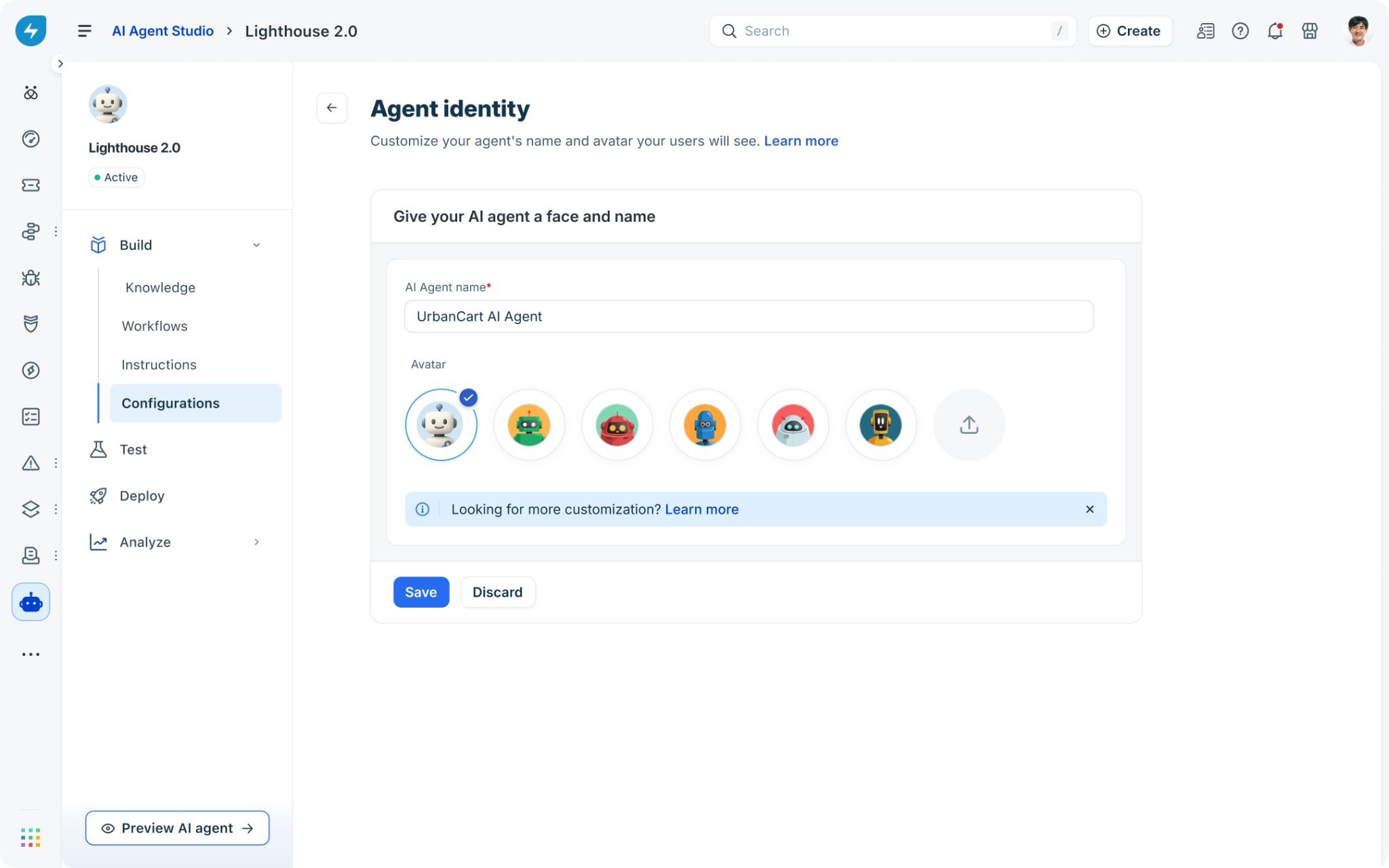
Agent identity lets you set the name and avatar that employees see when they interact with the agent. A clear, recognizable identity helps users understand who they are talking to and reinforces your organization’s brand.
Set the agent name
1. On the Configurations page, click Agent identity.
2. In the name field, enter the name you want to display. Keep the name short and easy to recognize.
3. Click Save.
``` If your organization runs more than one AI agent — for example, one for IT and one for HR — give each a distinct name so employees can tell them apart. ```
Set the agent avatar
1. On the Configurations page, click Agent identity.
2. In the avatar section, select an image from the available options or upload your own branded image.
3. Click Save.
The name and avatar you set here appear in every channel where the agent is deployed, including the support portal, Microsoft Teams, and Slack.
Best practices
What's next
After completing agent behavior configuration, you are ready to: