Last updated: 2026-04-06
Source: https://support.freshdesk.com/support/solutions/articles/50000011519-create-an-ai-agent
Create an AI Agent
AI Agents are people-first, AI-powered bots designed to handle Level 1 support and how-to queries automatically. They learn from multiple knowledge sources, such as solution articles, files, web links, and custom Q&As, to deliver accurate, conversational responses to your customers.
You can deploy AI Agents across multiple channels like WhatsApp, Web Chat, Facebook, Instagram, and so much more, so customers can get help wherever they are.
Benefits:
| |
AI agents can:
Set up AI Agent
You can go live with AI agent in a few easy steps:
1. Create a new AI agent 2. Build the capabilities of the AI agent (Add knowledge, Configure agent messages, and other settings) 3. Test the AI Agent 4. Preview and generate an external shareable link for the AI Agent 5. Deploy the AI agent on a channel to go live 6. Analyze the AI Agent's performance
Create a new AI Agent
1. As an admin, navigate to AI Agent Studio on the left navigation bar. 2. In the AI Agent Studio overlay, select AI agents and click Create AI Agent.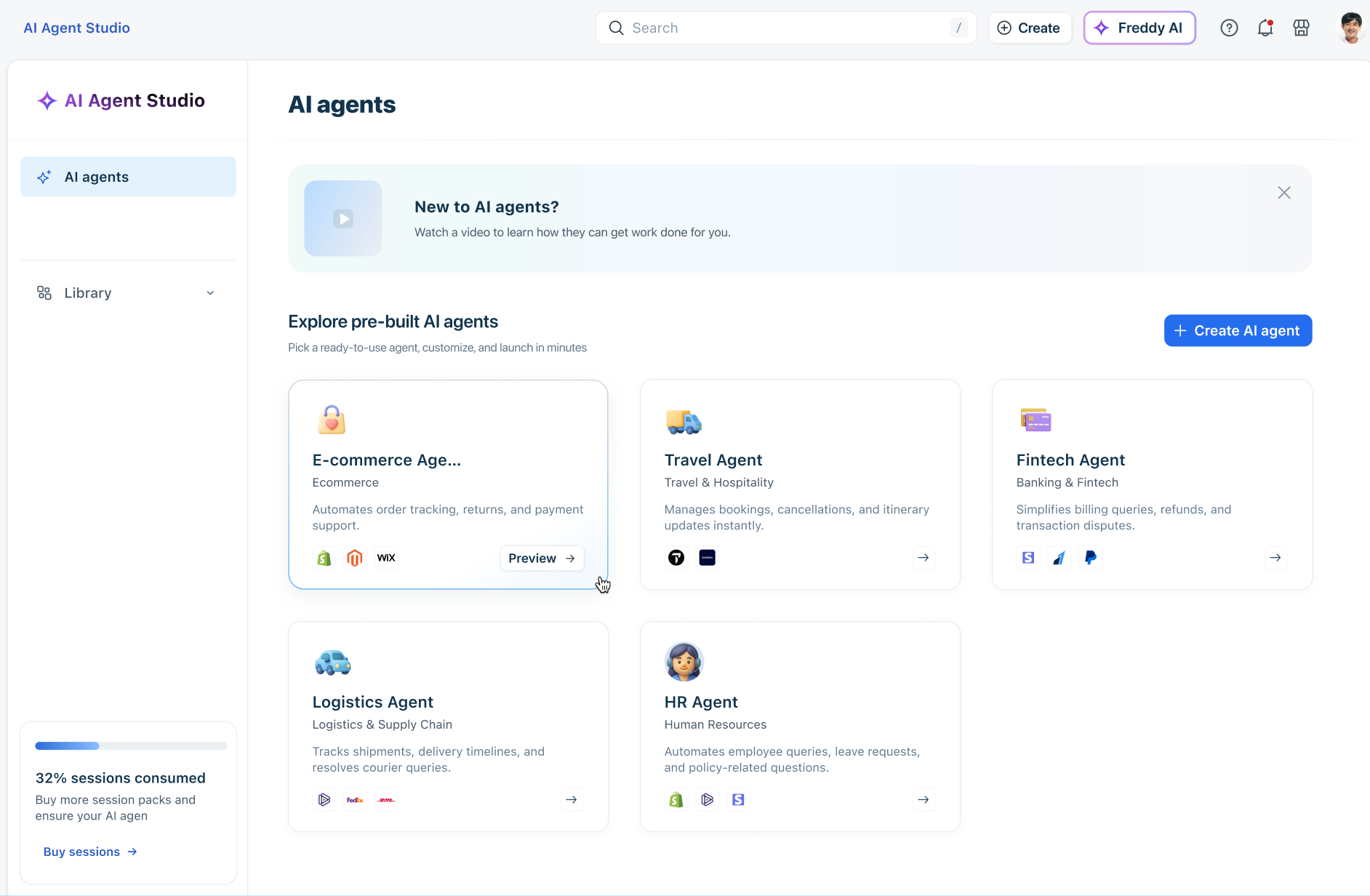 3. In the Create pop-up, provide a name, avatar, and select the Primary language. Click Create AI agent.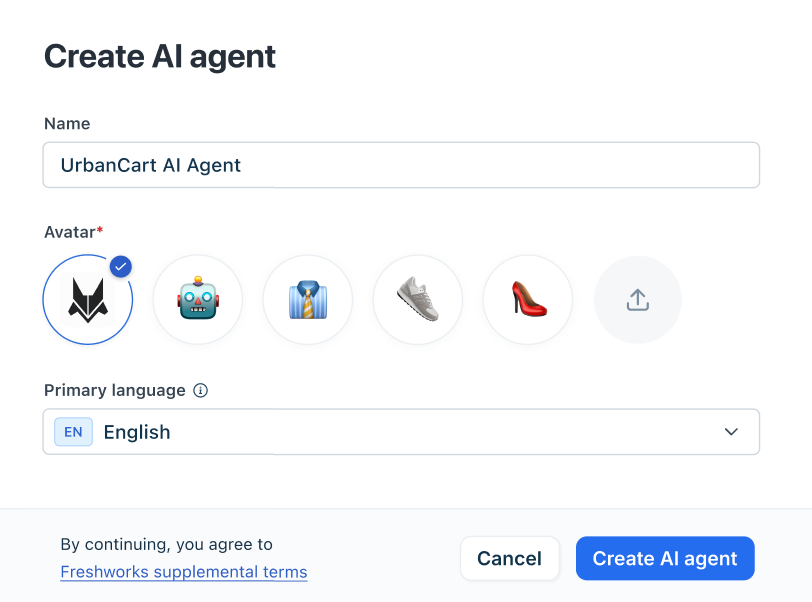
Build the capabilities of the AI Agent
After creating the AI agent, configure its capabilities using the options below:
A. Add knowledge:
In the Knowledge section, use the Build tab to add the knowledge sources from which you want the bot to learn. Learn more about enabling Knowledge.
Knowledge upload guide:
| Files | Type | - File formats supported - .txt, .docx, and .pdf.<br>- Maximum file size: 35MB<br>- Uploaded PDF files should not be password-protected. |
| AI agent level limits | - A maximum of 200 files can be added to a bot | |
| Account level limits | - A maximum of 200 files can be added per account. | |
| URLs | Type | - Only publicly available URLs are supported, for example: www.acme.com/warranty/India<br>- AI agent cannot learn from any private URLs.<br>- The AI agent will only learn from static text content available in the URL; learning from video, animations, or screenshots is not currently supported. |
| AI agent level limits | - A maximum of 10 URLs can be added to an AI agent.<br>- Can learn up to 3,000 pages from a website. | |
| Account level limits | - A maximum of 25 URLs can be added per account. |
B. Build Workflows
Workflows extend your AI Agent’s ability to think, reason, and act—automating complex workflows like order cancellations or subscription updates. You can create and manage Workflows using:
Learn more about Workflows for AI agents.
C. Provide Instructions
You can set clear directions for your AI agent to understand your business and deliver seamless, context-aware interactions. This page has two sections,
1. Define your business context: Describe your products, services, and typical customer scenarios. This ensures AI responses are accurate and tailored to your operations. 2. Set custom instructions: Provide high-level rules shaping how the AI thinks, acts, and responds in every interaction. Include precise guidelines and key terminology to guide responses.
Learn more about defining Instructions.
D. Set up Configurations
You can fine-tune your agent’s conversation behavior and escalation flow using these advanced configurations.
1. Multilingual support: Manage the languages in which the AI agent will respond from the list of supported languages. 2. Conversation behaviour: Specify how the agent interacts, including the introductory message, tone, response length, fallback handling, feedback, and user details collection. 3. Handover settings: Set options for closing conversations, transferring to a human agent, auto-resolution timing, and transferring outside of business hours. 4. Agent Identity: Customize your agent's name and avatar that your users will see.
Learn more about Configurations.
Test the AI Agent
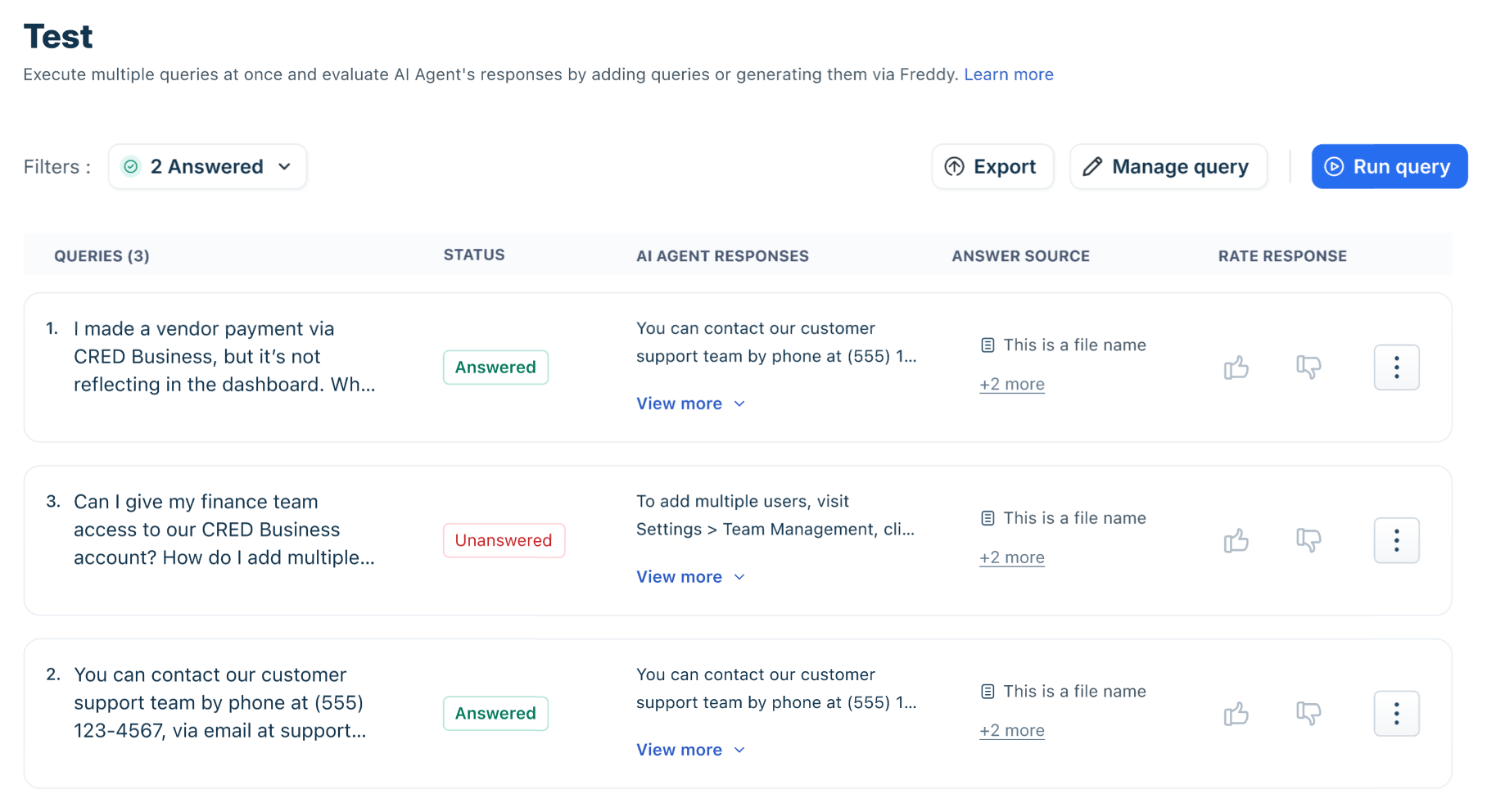
Test and refine your AI agent's responses to evaluate bot performance and meet customer expectations. Whether you're deploying or fine-tuning, this feature enables admins to simulate real-world scenarios.
For more details, see Test AI Agents.
Preview and generate an external shareable link for the AI Agent
Once you have configured and tested your AI Agent, use the Preview AI Agent option to view it as you configure it, or open it in a new tab.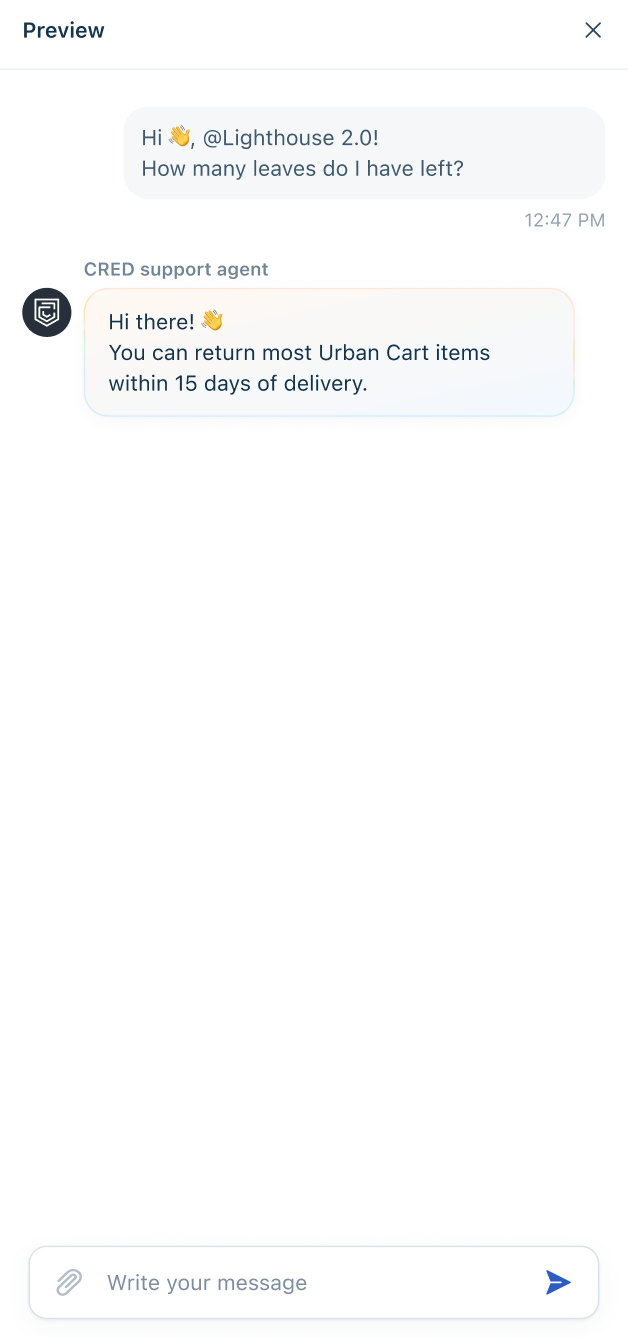
``` Note: In preview mode, Agent transfers will not be performed for unanswered queries or when human agent support was requested. ```
You can also create an externally shareable preview link for your AI Agent so that internal teams or stakeholders without agent licenses can test and provide feedback.
1. On the AI Agent Studio page, click the dropdown next to Preview AI Agent. 2. Toggle the Externally shareable preview option. 3. Copy the generated link and share it with the stakeholders. 4. Use the redo button to generate a different link.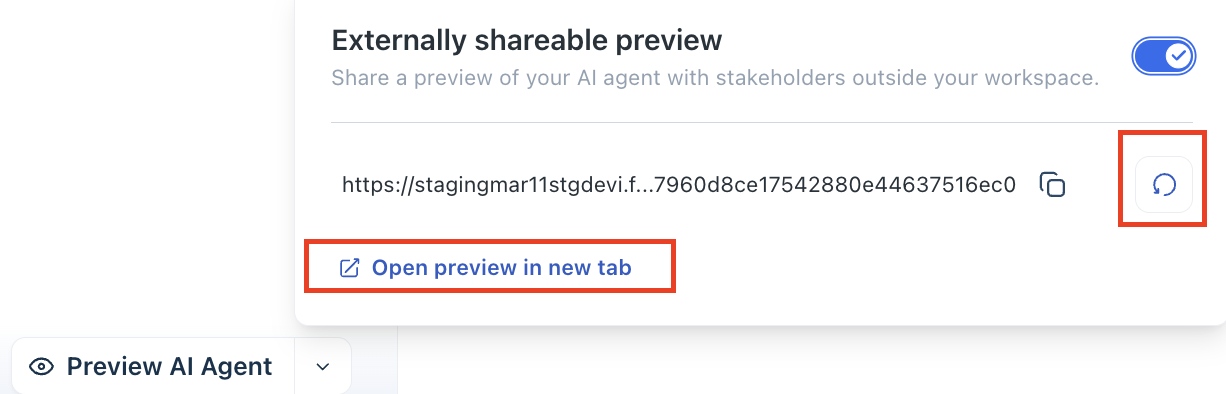
Deploy the AI Agent
Once you’ve configured your AI Agents, you can deploy and map them to communication channels where your customers engage with you.
Mapping your AI Agent to channels ensures it can respond to customer queries in real time, maintain consistent conversational experiences, and provide immediate assistance. You can deploy your AI Agent on the following channels:
``` Note: If a Published AI agent is archived, it becomes unpublished and unmapped. ```
To deploy the AI Agent onto channels:
1. On the AI Agent Studio page, click Deploy.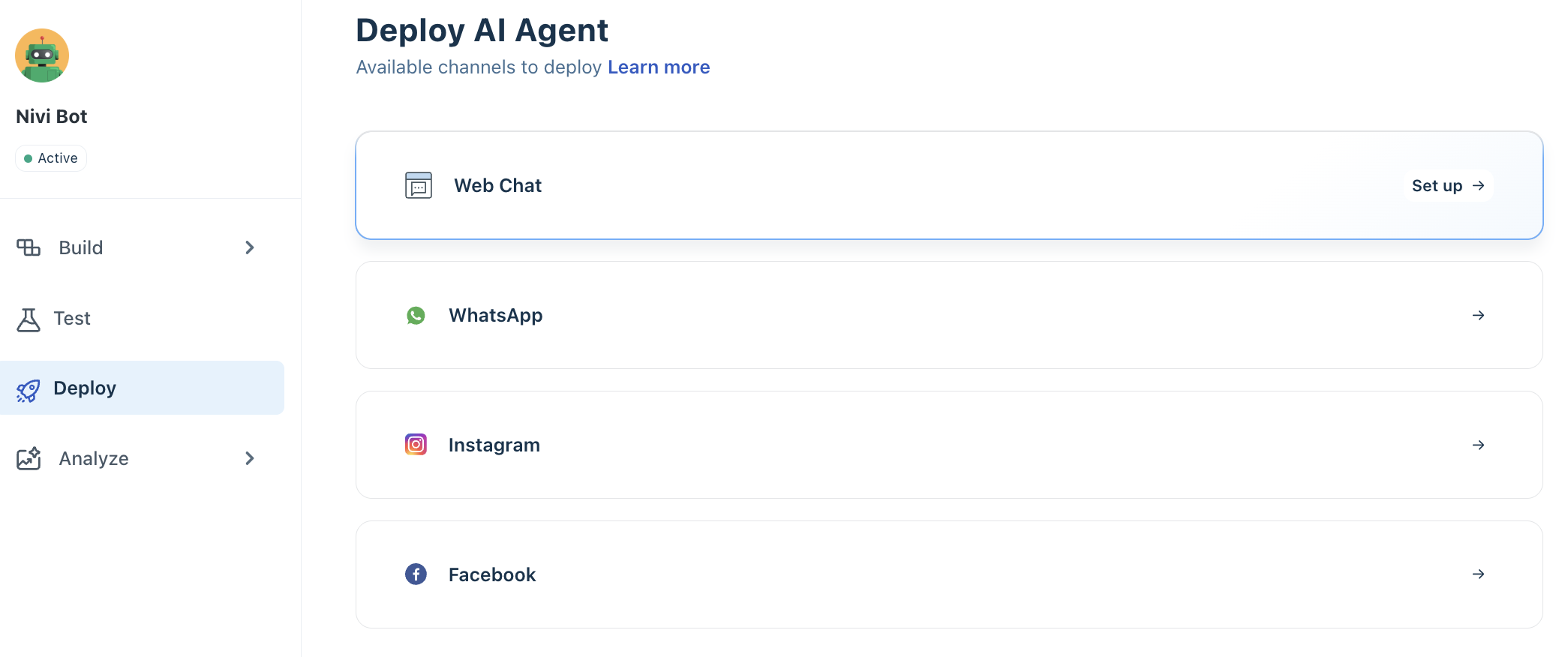 2. Select the channel where you want to deploy the AI Agent, then click Set up. You will be redirected to the respective channel configuration page for the selected channel.
For example, if you choose Web Chat, you will be redirected to the Web Chat Topic Configuration page.
1. Choose the Web Chat topic on which you want to deploy the AI Agent. 2. Click Configure and enable Start with AI Agent. 3. Choose the AI Agent to map. 4. Click Publish.
The AI Agent will now be linked to the Web Chat widget associated with the Web Chat Topic. You can then deploy the widget on your website or product portal. For more details, see Create Web Chat Topics.
Analyze the AI Agent's performance
Track and improve your AI Agent’s performance using the Analyze tab. The tab includes the following:
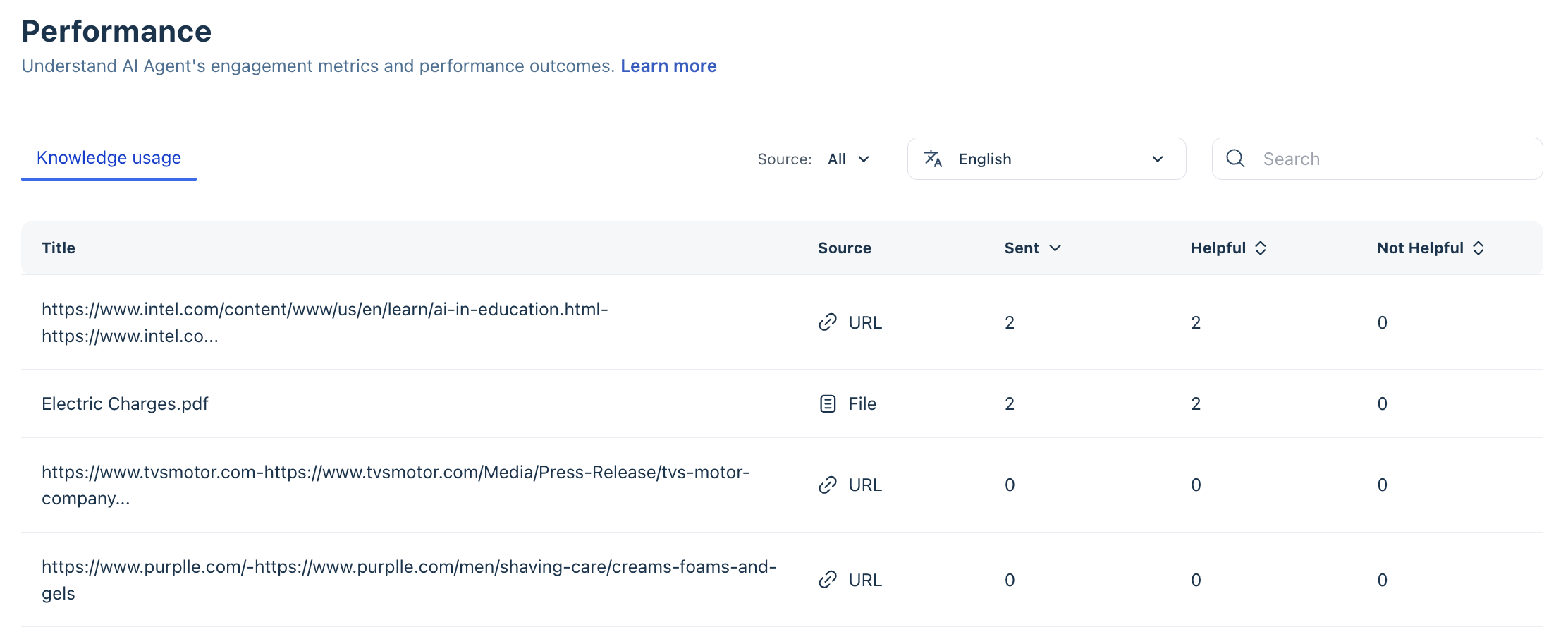
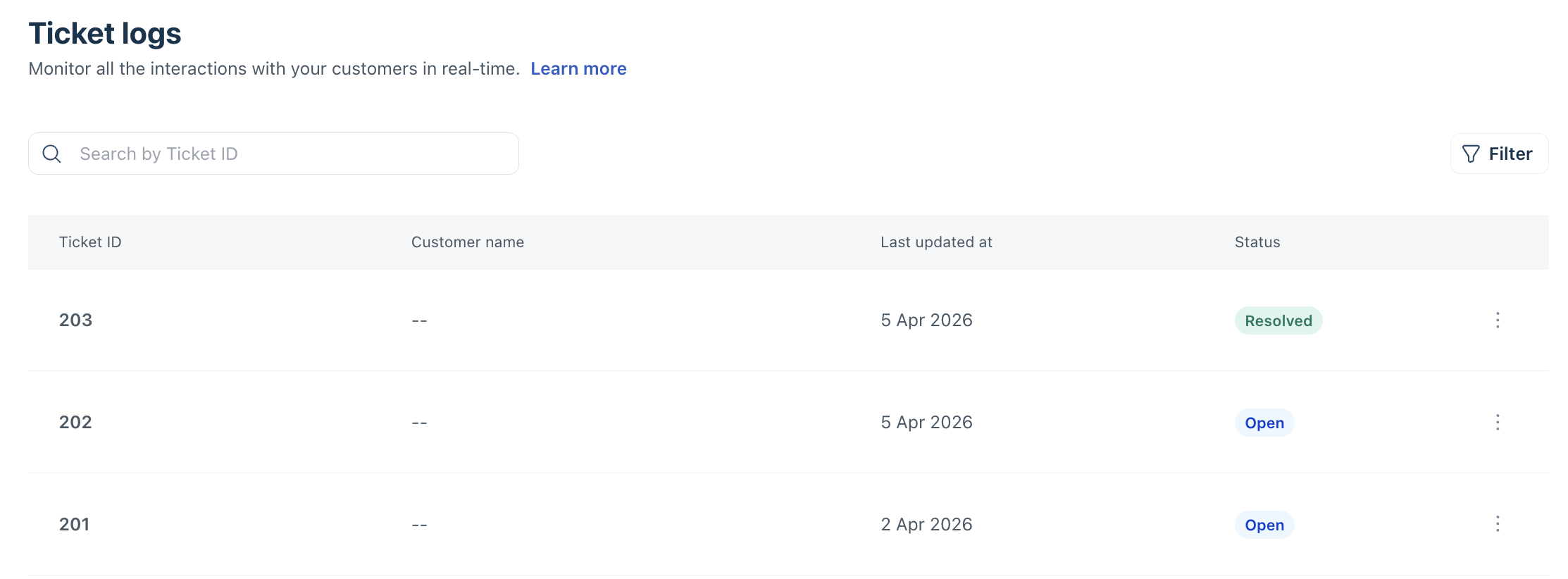
For more details, see Analyze and monitor AI Agent performance.
Agent Studio Library
Access pre-built, ready-to-go components in the Library section of AI Agent Studio. This no-code interface enables Admins to create new AI Agents, Agentic Workflows, and pre-built API Actions without writing a single line of code.—
1. AI Agents, 2. Workflows, and
These libraries accelerate setup for common business needs and save development time.
Archive and restore AI Agents
Over time, you may have AI Agents that are no longer in use. Archiving helps you declutter your workspace, improve performance, and manage your AI Agent inventory more efficiently—without immediately losing data.
To archive an AI agent,
1. Go to AI Agent Studio from the left nav bar. 2. Click the three-dot ellipsis menu next to the AI Agent. 3. Select Archive and confirm.
Once archived,
Archived AI Agents are not deleted immediately and can be accessed separately. To view and restore the archived AI agents,
1. Go to the Show filter section. 2. Select Archived from the dropdown.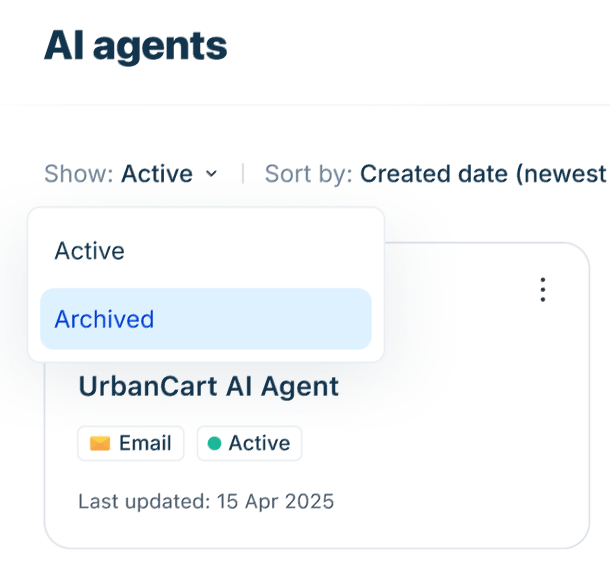 3. Click the three-dot menu next to the AI Agent. 4. Select Restore and confirm.
After restoration,
Key considerations
Monitor AI Agent Session Consumption
You can view the percentage of AI bot sessions consumed directly in the AI Agents Studio page. This gives you a quick snapshot of the number of sessions used and remaining.
Click the usage indicator to see a detailed breakdown of:
To get deeper insights, click View report to open the Chatbot Overview Report.
For a detailed view of session consumption, click View Report to access the Chat Bot Overview Report. Based on the sessions used, you can purchase additional sessions from the Billing page or contact your customer success manager. For more details on session consumption, see Freddy AI Agents and Chatbot Session FAQs.